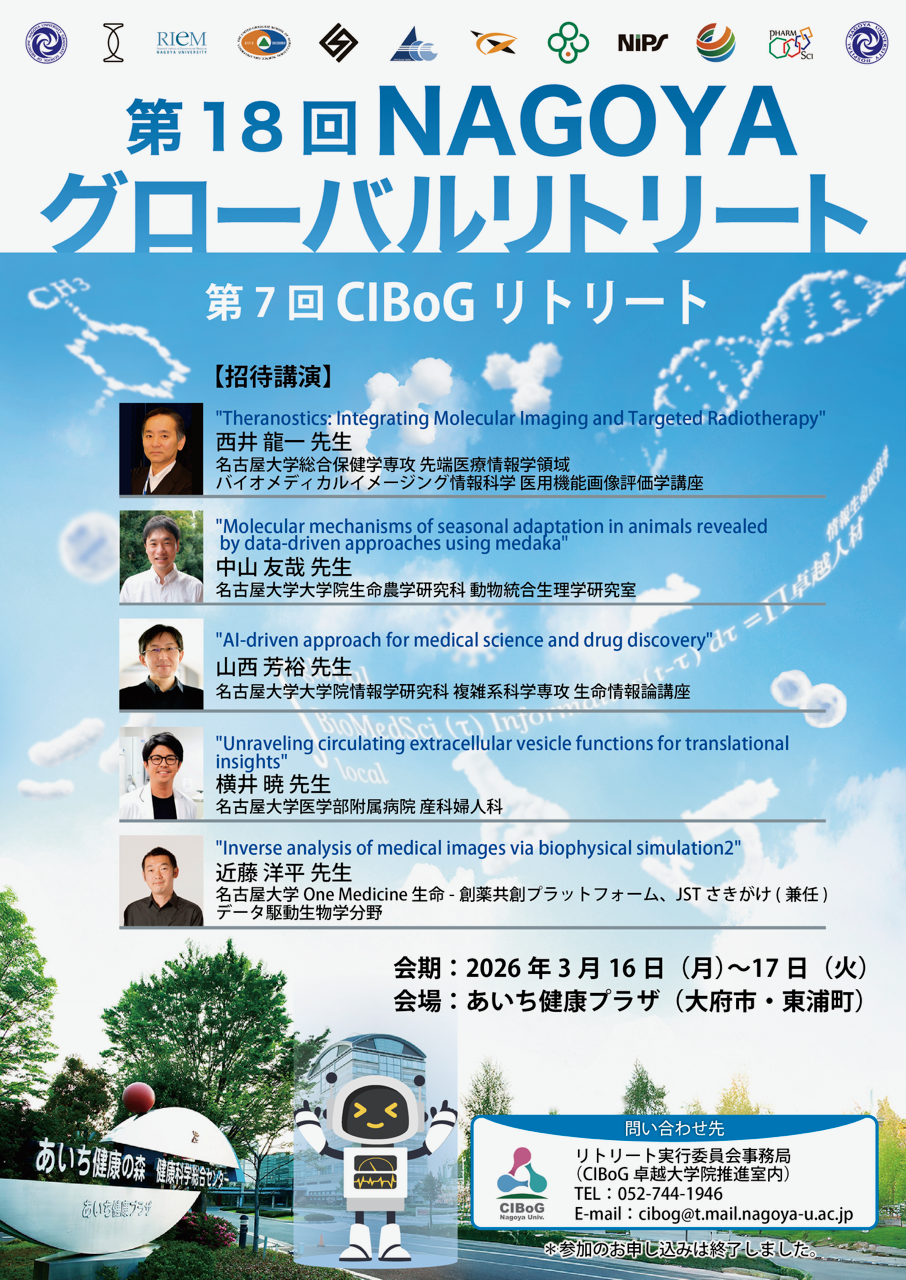
第18回NAGOYAグローバルリトリート(第7回CIBoGリトリート) 2026年3月16日(月)-17日(火)
第18回NAGOYAグローバルリトリート
(第7回CIBoGリトリート)
日 時:2026年3月16日(月)〜17日(火) 15:00解散(1泊2日)
場 所:あいち健康プラザ(大府市、対面)
プログラム :
スケジュール
・口頭発表、ポスター発表、学生主体によるグループワークなどを企画しております。
・普段では交流することが難しい方々との研究交流が持てる貴重な機会となっております。
 使用言語:英語
バ ス:
2026年3月16日(月)
08:15集合 8:30出発 東山・鶴舞キャンパス → 会場(あいち健康プラザ)
09:20 JR大府駅西口 → 会場(あいち健康プラザ)
20:00 会場(あいち健康プラザ) → JR大府駅
2026年3月17日(火)
08:20 JR大府駅西口 → 会場(あいち健康プラザ)
15:00 会場(あいち健康プラザ) → JR大府駅、東山・鶴舞キャンパス
公共交通機関
知多バス 時刻表
JR アクセス検索
参加費・食事(昼食・夕食)・宿泊費(朝食込み)は無料です。
3月16日(月)の夕食(交流会)希望者は当日1,000円お支払い下さい。
対象者:東海地区の研究機関の教員、研究者、ポスドク、医員、大学院生、学部生、
CIBoG連携機関の研究者
参加部局・機関(予定)
名古屋大学(医学系研究科、環境医学研究所、創薬科学研究科、情報学研究科、生命農学研究科、総合保健体育科学センター 他)
岐阜大学(連合農学研究科、自然科学技術研究科)
国立長寿医療研究センター
自然科学研究機構生理学研究所
愛知県がんセンター研究所
愛知県医療療育総合センター発達障害研究所 ほか
【招待講演】
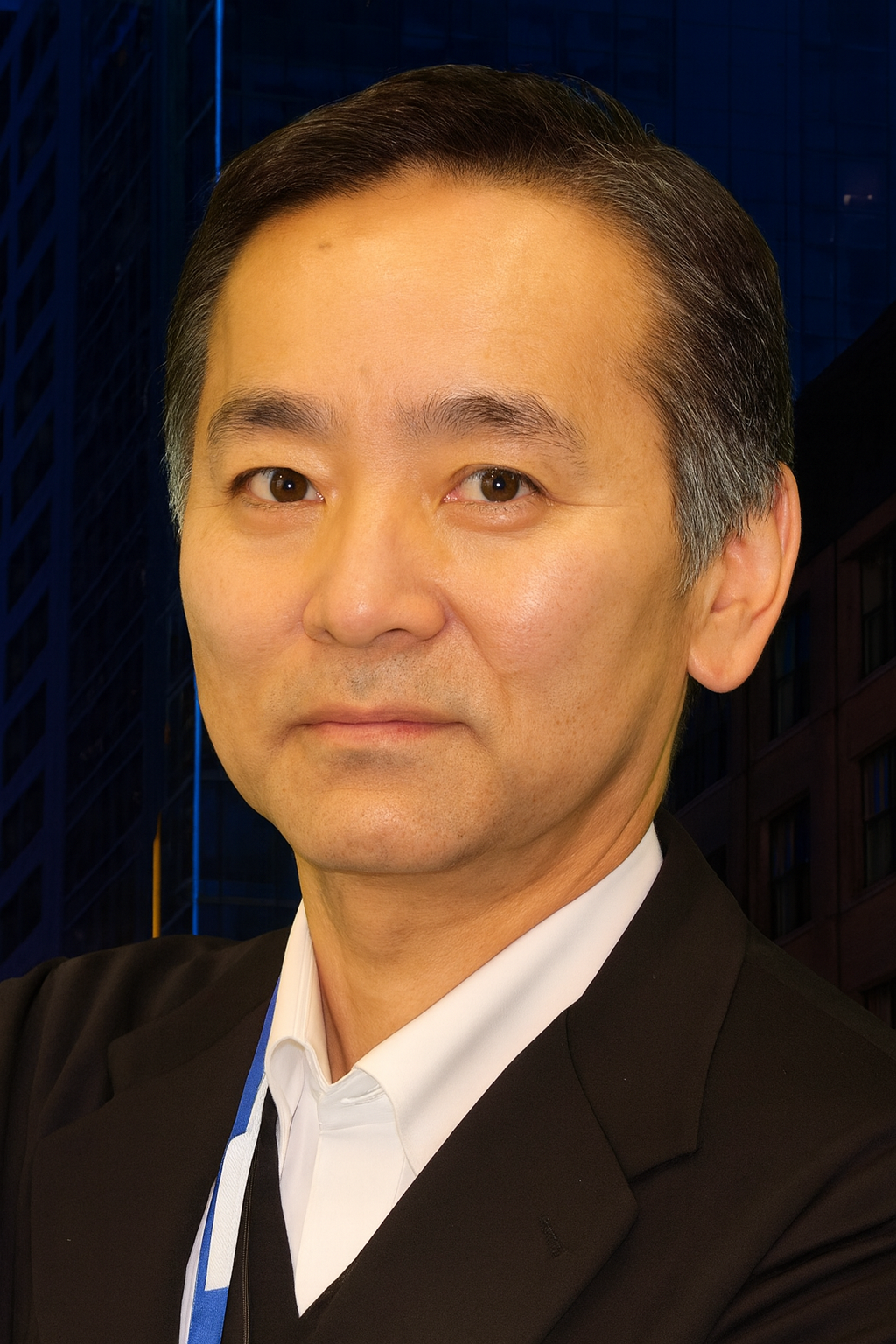
西井 龍一 先生 (教授)
名古屋大学総合保健学専攻 先端医療情報学領域
バイオメディカルイメージング情報科学 医用機能画像評価学講座
https://profs.provost.nagoya-u.ac.jp/html/100012907_en.html
"Theranostics: Integrating Molecular Imaging and Targeted Radiotherapy"
 |
Theranostics, the integration of molecular imaging and targeted radionuclide therapy, has emerged as a key paradigm in modern oncology. The concept dates back to the use of radioactive iodine for thyroid diseases in the 1940s, where the same molecular pathway enabled both diagnosis and treatment. In recent years, theranostic approaches have rapidly expanded with the clinical success of peptide receptor radionuclide therapy (PRRT) for neuroendocrine tumors and prostate-specific membrane antigen (PSMA)-targeted therapy for metastatic prostate cancer. These developments have transformed nuclear medicine from a primarily diagnostic discipline into a therapeutic specialty. The fundamental principle of theranostics is the use of matched diagnostic and therapeutic radiopharmaceuticals that target the same biological pathway. Molecular imaging enables noninvasive whole-body assessment of target expression, patient selection, and treatment monitoring. Therapeutic radionuclides, including beta and alpha emitters, deliver cytotoxic radiation selectively to tumor cells while minimizing damage to surrounding tissues. |
|
Recent advances highlight the growing importance of personalized dosimetry. Rather than administering fixed activities, quantitative imaging and absorbed-dose calculations are increasingly used to optimize treatment efficacy and safety. In this lecture, we will review the historical development of radionuclide therapy, current clinical applications such as PRRT and PSMA-targeted therapy, and emerging alpha-emitter treatments. we will also discuss the role of quantitative imaging and dosimetry in achieving truly personalized cancer treatment, and outline future perspectives for theranostics in the era of precision oncology. |
中山 友哉 先生 (特任講師)
名古屋大学大学院生命農学研究科 動物統合生理学研究室
https://profs.provost.nagoya-u.ac.jp/html/100011017_ja.html
"Molecular mechanisms of seasonal adaptation in animals revealed by data-driven approaches using medaka"
 |
In spring, many animals become more active and prepare for reproduction. Additionally, some animals migrate in autumn, and in winter, they hibernate or enter dormancy to survive the harsh season. As these examples demonstrate, animals can appropriately sense seasonal changes and flexibly alter their physiological functions and behaviors. Many animals adapt to seasons by relying on information from day length and temperature, but it is also known that they actively adapt to seasonal changes by utilizing an internal biological clock that maintains a rhythm with an approximately one-year cycle. However, many aspects of the molecular mechanisms underlying seasonal adaptation in animals remain unclear. |
| Medaka (Oryzias latipes) is an excellent model for understanding seasonal adaptation mechanisms in animals, not only because it exhibits sophisticated seasonal responses, but also because high-precision genomic information and genome editing technologies are available. We have developed data-driven research by applying omics analyses and genome editing technologies to this excellent model. In this presentation, I will introduce the mechanisms of seasonal adaptation in animals that have been revealed through these approaches. |
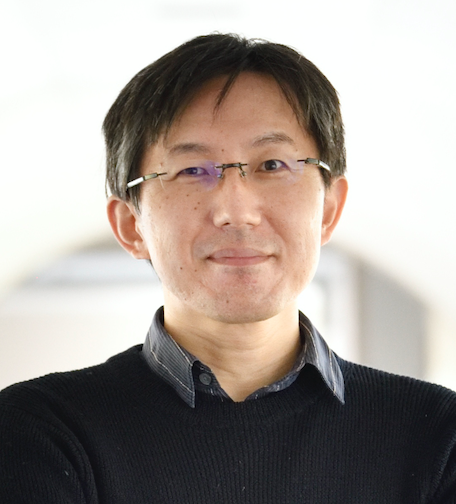
山西 芳裕 先生 (教授)
名古屋大学大学院情報学研究科 複雑系科学専攻 生命情報論講座
https://yamanishi.cs.i.nagoya-u.ac.jp/index_J.html
"AI-driven approach for medical science and drug discovery"
 |
Abstract: |
|
First, we present a computational approach for therapeutic target identification. A critical element of drug development is the identification of therapeutic targets for diseases, but the depletion of therapeutic targets is a serious problem. Here we propose to integrate genome-wide and transcriptome-wide association studies for predicting new therapeutic targets of various diseases including orphan diseases. Next, we present a network-based and structure-based approach for discovering therapeutic and side effects of drug candidate compounds. The prediction is performed based on molecular interaction networks and genome-side scale protein structures revealed by AlphaFold. Finally, we present a computational approach for de novo drug design. Most previous methods are based on chemical information, but they do not take into account biological information. Here we propose to utilize various biological data and polypharmacology toward the de novo design of drug candidate molecular structures with desired properties. |
横井 暁 先生 (講師)
名古屋大学医学部附属病院 産科婦人科
https://profs.provost.nagoya-u.ac.jp/html/100010954_ja.html
"Unraveling circulating extracellular vesicle functions for translational insights"
 |
As an obstetrician-gynecologist engaged in daily clinical practice, I routinely encounter a wide variety of biological fluids. Beyond commonly analyzed specimens such as blood, urine, and saliva, these include tumor fluid, ascites, amniotic fluid, follicular fluid, and nipple discharge. Each of these biofluids contains extracellular vesicles (EVs) including exosomes, which are thought to carry diverse biological messages. Reflecting on the information potentially embedded within these vesicles naturally leads to numerous research questions arising from clinical practice. Extracellular vesicles are lipid bilayer-enclosed particles released by virtually all living cells and circulate in body fluids carrying a wide range of bioactive molecules. |
| Over the past decade, EV research has rapidly expanded, revealing their critical roles in intercellular communication and driving advances in translational and applied research. At the same time, challenges related to reproducibility, standardization, and functional interpretation have become increasingly apparent. To address these issues, global efforts led by the International Society for Extracellular Vesicles (ISEV) have been undertaken to improve the quality and rigor of EV research. Meanwhile, the market and societal interest surrounding extracellular vesicles continue to grow, although public understanding remains fragmented and sometimes inconsistent. Looking toward the next decade, this lecture will highlight the fundamental appeal of extracellular vesicle research and discuss its vast potential enabled by multidisciplinary and cross-field approaches, with an emphasis on how EV biology can be harnessed to advance both basic science and clinical medicine. |
近藤 洋平 先生 (特任講師)
名古屋大学One Medicine 生命-創薬共創プラットフォーム、JSTさきがけ (兼任)
データ駆動生物学分野
https://www.tlimp.nagoya-u.ac.jp/
"Inverse analysis of medical images via biophysical simulation2"
|
|
Modern biology and medicine increasingly rely on high-dimensional spatio-temporal data such as live-cell imaging and whole-brain medical images. While machine learning methods provide powerful tools for predictive analysis, they do not necessarily provide insight into the underlying biological mechanisms. In this talk, I present a unified framework that combines biophysics modeling with machine learning methods to extract hidden physical and biochemical information from image data. Such an approach has long been studied in engineering under the name of inverse problem/analysis. However, in biomedical sciences, mathematical models tend to be far more uncertain and complex, which poses challenges in modeling, simulation and learning [1,2]. |

|
First, I introduce a fortunate case in which the material properties of cultured epithelia can be inferred by using textbook machine learning methods [3]. By coupling cellular velocity and force measurements with a growing elastic sheet model, we estimate stresses and material parameters without applying invasive external forces, revealing an unusual mechanical behavior consistent with epithelial function. Second, I turn to a more challenging case in which effective biochemical heterogeneity governing the progression of Alzheimer's disease is inferred from human brain PET scans. A core difficulty is that we need to estimate millions of parameter values to fully characterize biochemical heterogeneity across the whole brain. To address this issue, we formulate a reaction-diffusion model on realistic brain geometry and implement it in a differentiable simulation framework, which enables efficient learning via error backpropagation through time. We then estimate the spatially heterogeneous amplification rate of pathological tau, a quantity that is otherwise inaccessible to direct measurement. Finally, I will discuss open problems and future directions, with a particular focus on applications to spatial omics data. |
■参加登録・演題登録 *登録締切ました。ご登録ありがとうございました。
●東海国立大学機構(名古屋大学・岐阜大学)の方
・参加登録締切:2026年1月25日(日) →2026年2月6日(金)
https://forms.office.com/r/MkgPTCDEw0
*演題登録につきまして以下のURLより別途ご登録お願いします。
・演題登録締切:2026年2月1日(日) →2026年2月6日(金)
https://forms.office.com/r/jVvjAUekZd
●学外(岐阜大学以外)の方 *登録締切ました。ご登録ありがとうございました。
生理学研究所
・参加登録締切:2026年1月25日(日) →2026年2月6日(金)
https://forms.gle/YZ2VRdrUMNSxUqDS8
愛知県がんセンター研究所
・参加登録締切:2026年1月25日(日) →2026年2月6日(金)
https://forms.gle/pbeYfMvPw3pd9qRT6
国立長寿医療研究センター研究所
・参加登録締切:2026年1月25日(日) →2026年2月6日(金)
https://forms.gle/xTVFisc7UTNNa3iR6
愛知県医療療育総合センター 発達障害研究所
・参加登録締切:2026年1月25日(日) →2026年2月6日(金)
https://forms.gle/xZcsDMZ9eXaCgJiK6
*演題登録につきましては別添のWordに記載し、各研究所で取りまとめてご提出をお願いします。
・参加登録締切:2026年2月1日(日) →2026年2月6日(金)
18th NAGOYA Global Retreat- Abstract Registration.docx
■ポスター発表について
1. 言語:英語で作成してください。
2. サイズ:幅 90cm ×高さ 180cm以内
3. 対象:誰でも発表可能。ただし、ポスター賞の対象は学生に限定させて頂きます。
4. ポスター掲示時間:3月16日(月) 10:00〜20:30(貼付9:00〜10:00, 回収20:30〜21:00)
5. ポスター審査時間:3月16日(月) 11:15~12:50(奇数)、14:25~15:20(偶数)
この時間にポスター賞の審査を行います。発表者はポスター横に待機してください。
6. 演題登録:登録サイトにて、演題とabstract(200 words)を英語でご登録ください。
7. 演題番号:抄録に掲載します。各自ご確認ください。
お問い合わせ先:
リトリート実行委員会事務局(CIBoG卓越大学院推進室内)
Tel: 052-744-1946
cibog@t.mail.nagoya-u.ac.jp